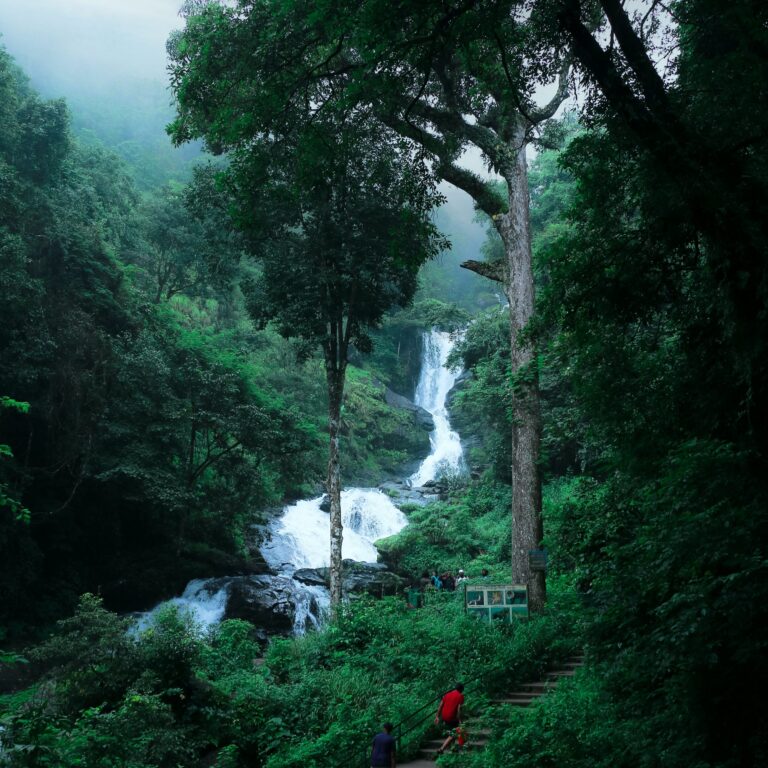

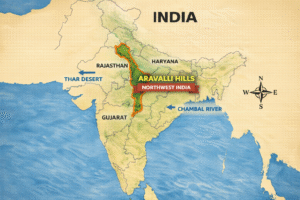
The Aravalli Hills are not just a mountain range; they are a living witness to India’s geological, ecological, and cultural history. Stretching across western India, the Aravallis have silently shaped climate patterns, supported biodiversity, and protected human settlements for thousands of years. Today, however, this ancient range stands at the center of growing environmental concerns and controversy.
History of the Aravalli Hills
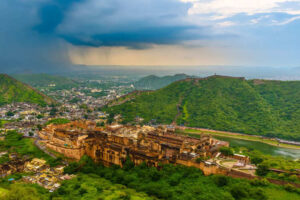
The Aravalli Range is one of the oldest mountain ranges in the world, estimated to be over 1.5 billion years old. It predates the Himalayas by hundreds of millions of years and was formed through ancient geological processes involving tectonic plate movements and erosion.
Historically, the Aravallis played a crucial role in the development of early Indian civilizations. They influenced settlement patterns by providing natural resources such as stone, minerals, and water. Many ancient kingdoms, including those of the Rajputs, flourished in and around the Aravalli region. Forts like Kumbhalgarh and Ranthambore stand as reminders of the strategic importance of these hills in Indian history.
Why the Aravalli Hills Are Important
The significance of the Aravalli Hills goes far beyond their age.
1. Ecological Balance
The Aravallis act as a natural barrier against desertification, especially preventing the expansion of the Thar Desert toward eastern India. They help regulate rainfall patterns and maintain regional climate stability.
2. Water Security
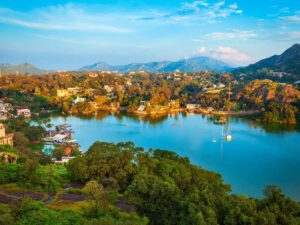
These hills play a vital role in groundwater recharge. Many rivers and seasonal streams originate from the Aravallis, supporting agriculture and drinking water needs in Rajasthan, Haryana, and Delhi.
3. Biodiversity Hotspot
The range is home to diverse flora and fauna, including leopards, hyenas, jackals, and numerous bird species. Forests in the Aravallis serve as important green lungs for nearby urban centers.
4. Protection from Pollution
For cities like Delhi-NCR, the Aravalli forests help reduce air pollution by acting as carbon sinks and dust barriers.
Why the Aravalli Hills Are in Controversy Today
Despite their importance, the Aravalli Hills are facing serious threats.
Unregulated Mining and Construction
For decades, illegal mining for stone and minerals has damaged large portions of the Aravalli range. Although mining has been restricted by court orders, enforcement remains weak in many areas.
Urban Expansion and Deforestation
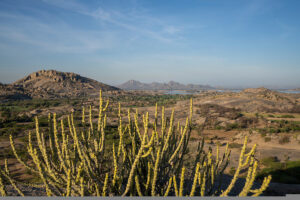
Rapid urbanization, especially in Haryana and Rajasthan, has led to the clearing of forests for real estate projects, roads, and infrastructure. Changes in land-use definitions have further fueled concerns about the loss of protected forest areas.
Environmental Degradation
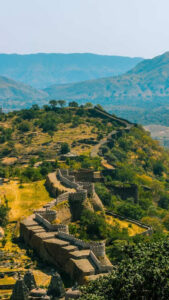
The destruction of the Aravallis has contributed to falling groundwater levels, rising temperatures, and increased air pollution in surrounding regions, particularly Delhi-NCR.
Legal and Policy Disputes
Ongoing debates between environmentalists, governments, and developers have made the Aravalli issue a legal and political flashpoint, highlighting the tension between development and conservation.
Conclusion
The Aravalli Hills are a priceless natural heritage that has protected India for millennia. Preserving them is not just an environmental responsibility but a necessity for sustainable living. As controversies continue, the future of the Aravallis depends on strong conservation efforts, responsible governance, and public awareness. Saving the Aravallis today means securing a healthier tomorrow.


